Category: Social Media Growth for Local Brands
Excerpt: Stop wasting money on ineffective ads. Discover the latest Facebook advertising strategies that actually work to reach customers in your local neighborhood now.
Facebook ads deliver results for local businesses in 2026. Success requires proper audience targeting, clear creative, and fast follow-up with leads.
Retargeting Local Customers
Retargeting reconnects you with users who showed interest in your business. This strategy works because it targets people who already know your brand.
A salon can retarget users who visited the appointment page but didn't book. Show them a discount code for their next service. A restaurant can retarget lunch visitors with dinner specials.
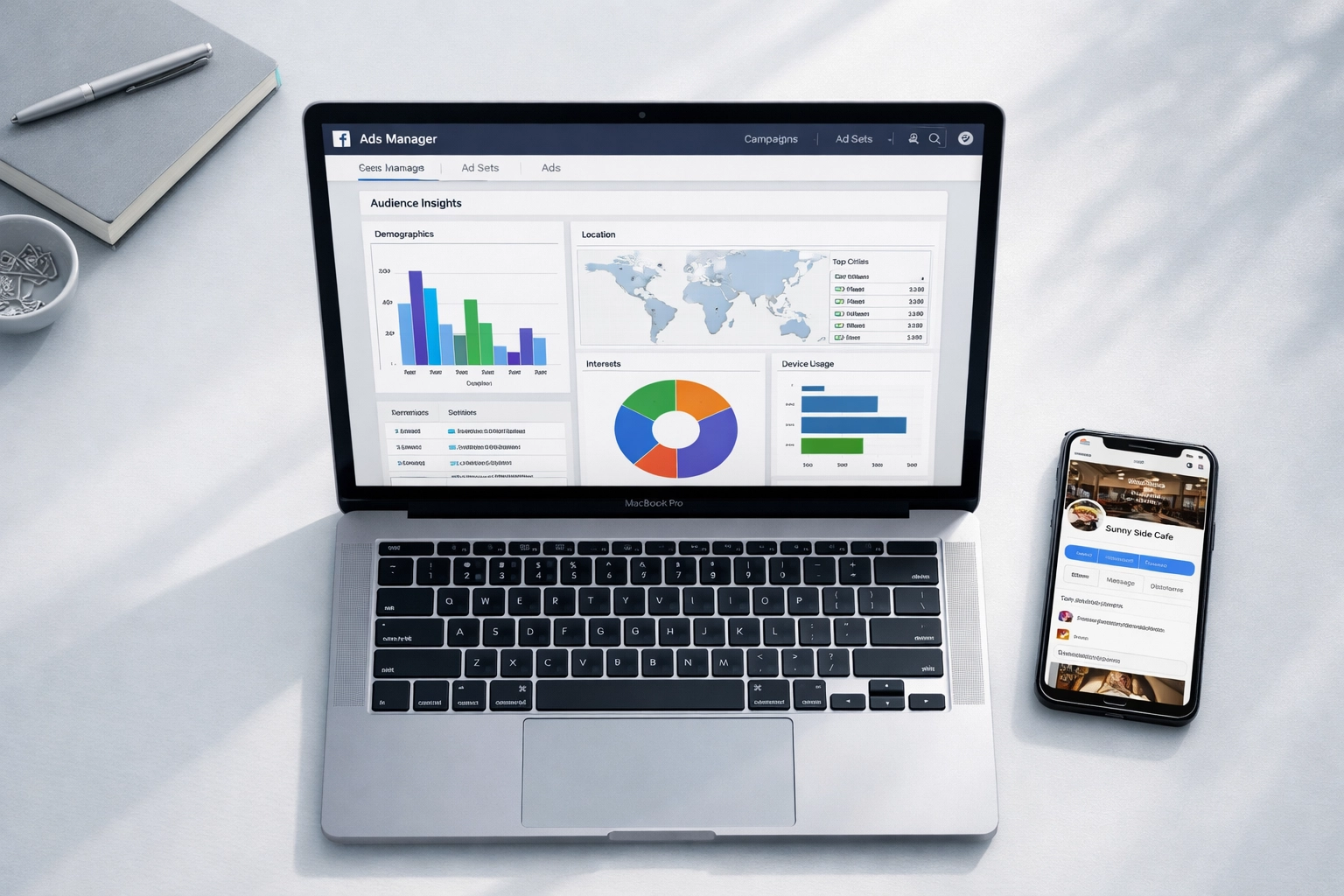
Segment your audiences based on behavior. Create different campaigns for people who visited your pricing page versus those who only viewed your homepage. One restaurant increased engagement by 3x and reservations by 25% using retargeting with fresh ad creative.
Focus retargeting on users from the past 7-14 days. Recent visitors are more likely to convert than older audiences.
Lead Generation Forms
Facebook lead generation ads collect information without sending users to another website. Users submit details directly on Facebook. This reduces friction and improves conversion rates.
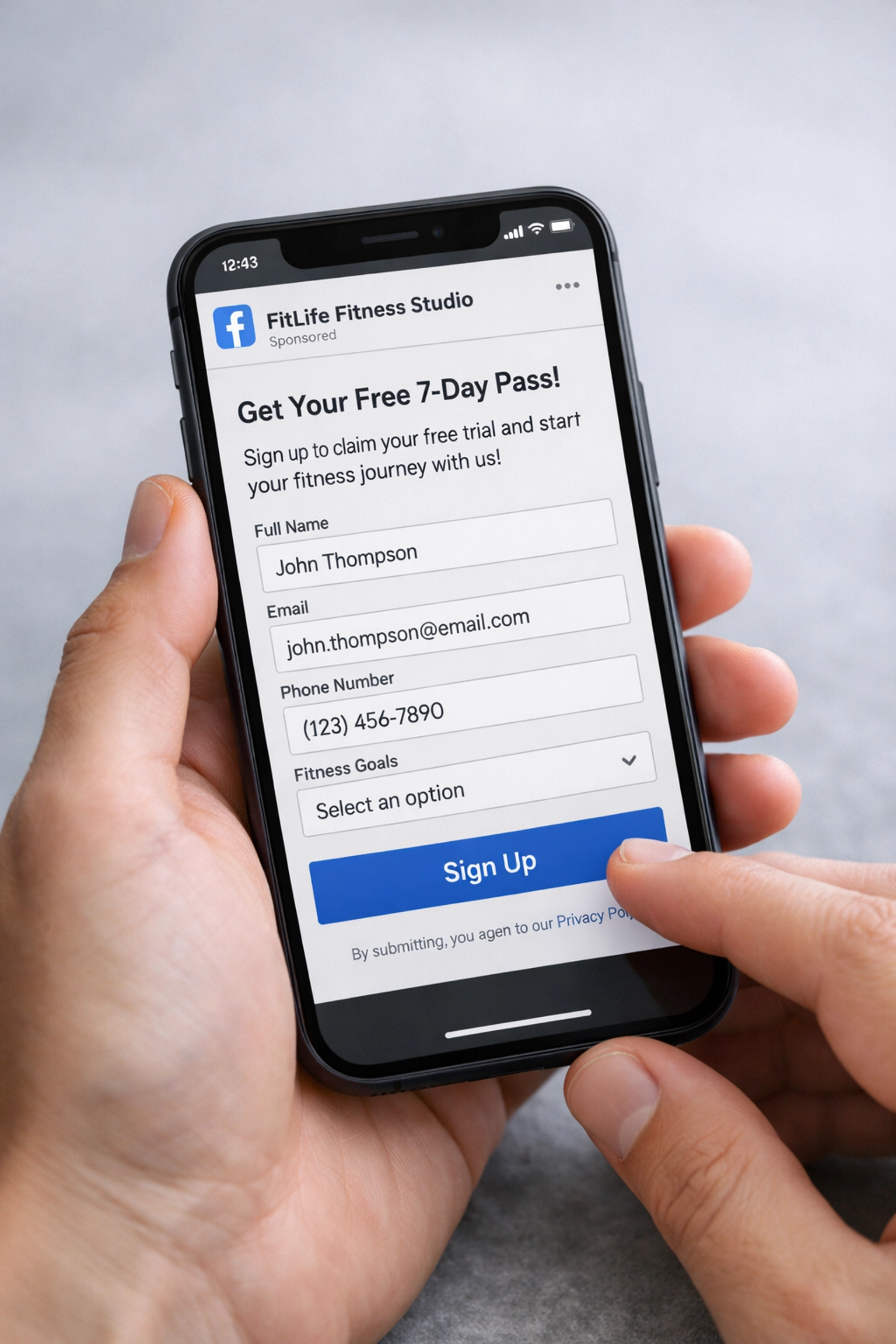
A fitness studio can offer a free trial class in exchange for contact details. A salon can collect leads for appointment bookings. A home service company can gather information for free estimates.
Add qualifying questions to your forms. Manual entry questions work better than autofill options. Autofill causes confusion when users don't review pre-populated data. Ask specific questions like service type or preferred appointment time.
Connect lead forms to your CRM system for immediate follow-up. Speed matters in lead response.
Geographic Targeting Settings
Facebook allows targeting by ZIP code, city, and radius around your business location. Use this to avoid wasted ad spend on users outside your service area.
Restrict ads to a 5-10 mile radius for retail businesses. Service-based businesses can expand to 15-25 miles depending on travel range. A plumber doesn't need to advertise 50 miles away.
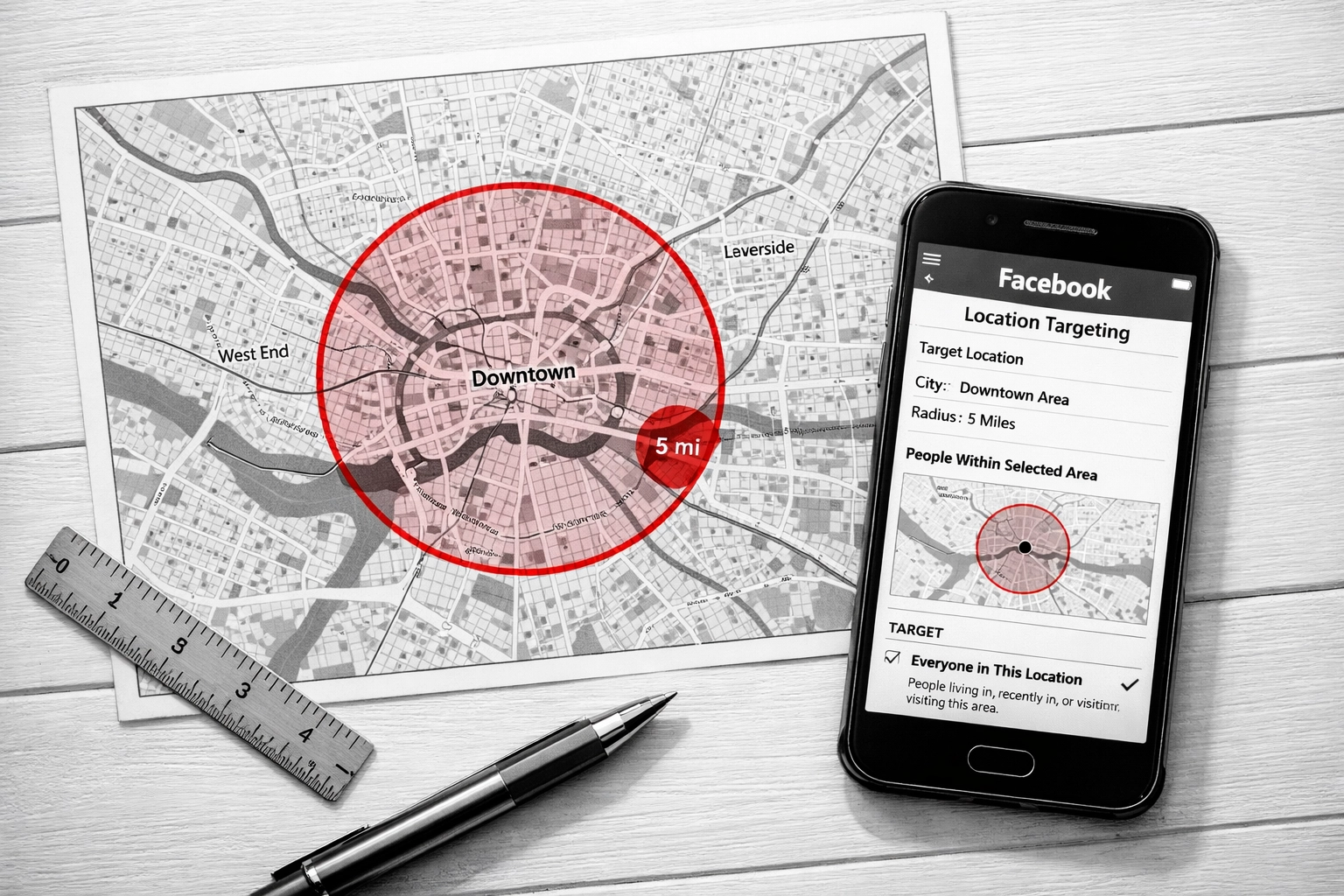
Combine location targeting with demographic filters. Target by age, income level, education, and interests. A high-end restaurant should target higher income brackets. A children's activity center should target parents with kids in specific age ranges.
Narrow targeting reduces wasted budget. Generic campaigns that target everyone perform worse than specific audience segments. Test different radius sizes to find optimal performance for your business type.
Video Content Requirements
Short videos between 15-60 seconds perform better than longer content. The first three seconds determine if users keep watching.
Always add captions to videos. Most users watch with sound off. Captions ensure your message gets across without audio.
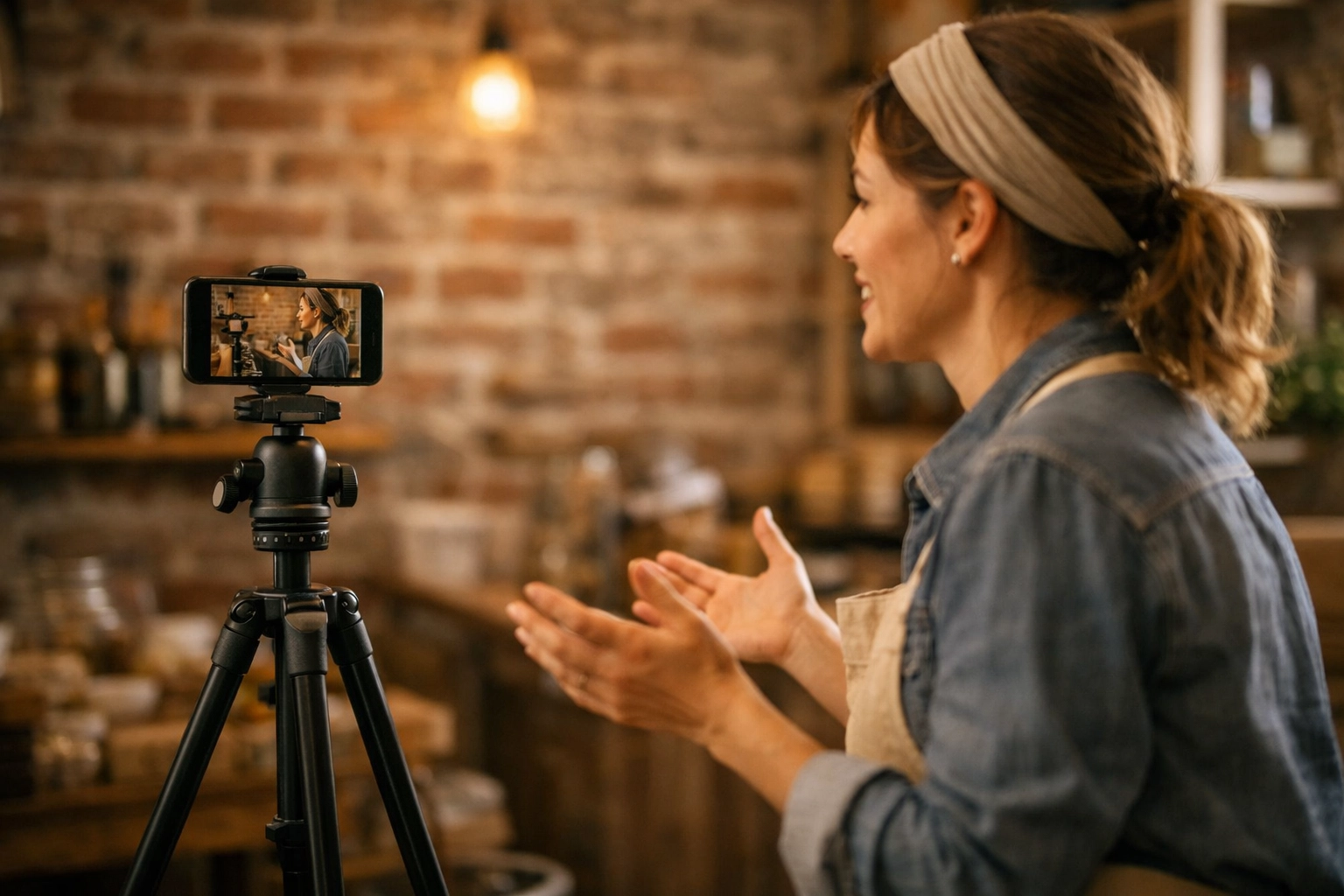
Show your actual business, staff, and customers. Behind-the-scenes content connects better than generic stock footage. A bakery can show morning prep work. A gym can feature real member transformations.
Keep videos simple. A single clear message works better than multiple points. Focus on one service, one promotion, or one customer benefit per video.
Data Quality and Lead Response
Accurate conversion tracking separates winning campaigns from losing ones. Install the Facebook pixel correctly on your website. Track key actions like form submissions, phone calls, and purchases.
Clean audience data improves ad performance. Remove outdated customer lists. Update lookalike audiences quarterly. Poor data quality wastes budget on wrong targets.
Speed matters in lead follow-up. Leads are 7x more likely to respond if contacted within one minute. Set up automated text or email responses immediately after form submission. Have staff ready to call leads within 5-10 minutes during business hours.
Use a CRM system to track lead status. Know which ads generate quality leads versus tire kickers. Adjust budgets toward campaigns that produce actual customers, not just form fills.
Creative Strategy for 2026
Authentic imagery outperforms polished stock photos. Users want to see real businesses and real people. Show your actual location, staff, and work.
AI-generated content is oversaturating the market. Genuine photos and honest messaging stand out. A local coffee shop should show their real baristas and actual espresso machine, not generic coffee imagery.
Test different ad formats. Carousel ads work well for showcasing multiple services or products. Single image ads perform better for focused promotions. Stories ads reach users in a different context than feed ads.
Refresh creative every 2-3 weeks. Ad fatigue happens when the same audience sees identical ads repeatedly. Change images, headlines, or offers regularly to maintain performance.
Budget and Bidding Approach
Start with $10-20 per day for initial testing. Monitor results for 7-14 days before making major changes. Facebook's algorithm needs time to optimize delivery.
Use automatic bidding initially. Let Facebook find your audience at the best cost. Switch to manual bidding once you understand average costs in your market.
Focus budget on your best-performing ad sets. Cut campaigns that don't generate leads or sales after two weeks of testing. Reallocate money to proven winners.
Track cost per lead and cost per customer, not just click costs. A $5 lead that never converts wastes more money than a $15 lead that becomes a $500 customer.
Measuring What Matters
Set up conversion tracking for business goals. Track appointment bookings, phone calls, online purchases, or form submissions based on your business model.
Monitor metrics that connect to revenue. Reach and impressions don't pay bills. Focus on leads generated, appointments booked, and actual sales.
Compare ad performance to other marketing channels. Know your customer acquisition cost from Facebook versus Google, email, or other sources. Invest more in channels with lower acquisition costs.
Review campaign data weekly. Make small adjustments to targeting, creative, or budget based on performance trends. Large changes disrupt the learning phase and reset optimization.
Starting Your Facebook Local Ads: Focus on One Strategy for 30 Days
Pick one strategy from this list and test it for 30 days. Businesses that try everything at once waste budget and gain no clear insights. Master retargeting before moving to cold audience campaigns.
Use Facebook's local awareness objective for businesses with physical locations. This objective optimizes for nearby users most likely to visit your store.
Connect with Business Boosted for help setting up tracking systems and campaign structure. Proper foundation work determines long-term success with Facebook advertising.