
Your chiropractic practice helps patients find relief every day. But if potential patients cannot find you online, your schedule stays empty. Most people search for "chiropractor near me" when they need help. Your online presence determines whether they call your office or your competitor down the street.
Local search optimization drives patient acquisition for chiropractic practices. The difference between appearing in the top three Google Map results versus position seven can mean hundreds of missed appointments each year.
Local SEO: The Foundation of Patient Acquisition
Local SEO positions your practice in front of patients actively searching for chiropractic care in your area. Start with location-specific keywords on your website. Include phrases like "chiropractor in [Your City]" and "back pain treatment in [Your Neighborhood]" throughout your content.

Your website content should address common patient concerns. Create pages for specific conditions you treat: lower back pain, neck pain, sports injuries, headaches, and sciatica. Include your city and neighborhood names naturally within this content.
Technical elements matter. Ensure your practice name, address, and phone number appear consistently across your website. Add schema markup to help search engines understand your business type, location, and services. Mobile optimization is required since most local searches happen on phones.
Google Business Profile: Your Digital Front Door
Your Google Business Profile functions as your primary patient acquisition tool. Claim your profile and complete every section. Add your practice name, full address, phone number, website, and accurate business hours.

Upload high-quality photos of your office, treatment rooms, and staff. Practices with photos receive 42% more requests for directions and 35% more clicks to their websites. Include images that show your clean, professional space and modern equipment.
Select the correct business categories. Choose "Chiropractor" as your primary category. Add secondary categories if applicable, such as "Sports Medicine Clinic" or "Pain Management Physician."
Post updates regularly through your Google Business Profile. Share health tips, announce new services, or explain common treatment approaches. These posts keep your profile active and provide fresh content for potential patients.
Respond to questions in the Q&A section. Patients often ask about insurance acceptance, appointment availability, and specific treatment methods. Your prompt responses demonstrate accessibility and build trust.
Patient Reviews: Building Trust and Rankings
Reviews directly impact both your search rankings and patient decisions. Google reviews carry the most weight for local search visibility. Each new positive review signals to Google that patients value your services.

Request reviews from satisfied patients immediately after successful treatment outcomes. Send follow-up messages thanking patients for their visits and include a direct link to your Google review page. Make the process simple.
Respond to all reviews, both positive and negative. Thank patients for positive feedback. Address negative reviews professionally and offer to resolve concerns offline. Your responses show potential patients how you handle feedback.
Display reviews on your website. Testimonials provide social proof that builds confidence in new patients considering your practice. Include patient names and photos when possible with proper consent.
Business Boosted provides reputation management systems that automate review requests and monitor your online reputation across multiple platforms.
Social Media: Focused Platform Strategy
Select one or two social media platforms where your target patients spend time. Facebook and Instagram work well for chiropractic practices reaching adults aged 35-55.
Post consistently on your chosen platforms. Share educational content about spine health, posture tips, and injury prevention. Show your office environment and introduce your staff. Post patient success stories with permission.
Video content performs better than static images. Record short clips explaining common conditions or demonstrating proper lifting techniques. Keep videos under 60 seconds for maximum engagement.
Engage with comments and messages promptly. Social media functions as a communication channel where potential patients assess your responsiveness and expertise before scheduling appointments.
Paid Advertising: Accelerating Patient Growth
Google Ads delivers immediate visibility for chiropractic practices. Healthcare paid search converts at 8.09%, significantly higher than most industries. Target location-specific keywords like "chiropractor near me" and "back pain relief [city name]."
Create dedicated landing pages for your ads. Send users to pages that match your ad message rather than your homepage. A landing page about back pain treatment converts better than a general practice overview.
Test different ad headlines. Messages like "Same-Day Appointments Available" or "Drug-Free Pain Relief" resonate with patients seeking immediate solutions. Monitor which headlines generate the most appointment requests.
Facebook and Instagram ads allow precise demographic targeting. Focus on your local area and target adults aged 35-55, the demographic most likely to seek chiropractic care. Highlight specific services like sports injury treatment or prenatal chiropractic care.
Set clear conversion goals. Track phone calls, form submissions, and appointment bookings from your ads. This data shows which campaigns deliver the best return on investment.
Website Optimization: Converting Visitors to Patients
Your website converts interested visitors into booked appointments. Ensure fast loading speeds. Pages that load slowly lose potential patients to competitors.

Include clear calls-to-action on every page. Place "Schedule Appointment" buttons prominently. Offer online booking if possible, as many patients prefer scheduling without phone calls.
Create informative content that answers common questions. Explain what happens during a first visit. Address insurance and payment questions. Describe your treatment approaches. This content reduces patient anxiety and increases appointment bookings.
Add trust signals throughout your site. Display credentials, certifications, and years of experience. Include professional association memberships. Show insurance logos if you accept specific plans.
Implement contact forms that request minimal information. Name, phone number, and preferred appointment time suffice. Lengthy forms reduce completion rates.
Local Citations: Consistency Across Directories
List your practice on relevant online directories. Yelp, Healthgrades, and Vitals serve as important discovery platforms for chiropractic practices. Ensure your practice name, address, and phone number match exactly across all listings.
Inconsistent information confuses search engines and patients. "123 Main Street" should not appear as "123 Main St." on different sites. Standardize how you present your business information everywhere online.
Industry-specific directories matter for chiropractors. Join your state chiropractic association directory. List your practice on healthcare-specific platforms. These citations build authority signals that improve local search rankings.
Email Marketing: Patient Retention and Reactivation
Email marketing maintains connections with existing patients and reactivates dormant ones. Send monthly newsletters with health tips relevant to your patient base. Include seasonal advice like "Preventing Snow Shoveling Injuries" or "Summer Sports Injury Prevention."
Segment your email list by patient type. New patients receive different messages than long-term patients. Those who haven't visited in six months receive reactivation offers.
Include clear calls-to-action in every email. Encourage patients to schedule their next adjustment or refer family members. Make appointment booking simple with direct links to your scheduling system.
Track email performance metrics. Monitor open rates, click rates, and appointment bookings generated from email campaigns. Use this data to refine your messaging and timing.
Measuring Results and Adjusting Strategy
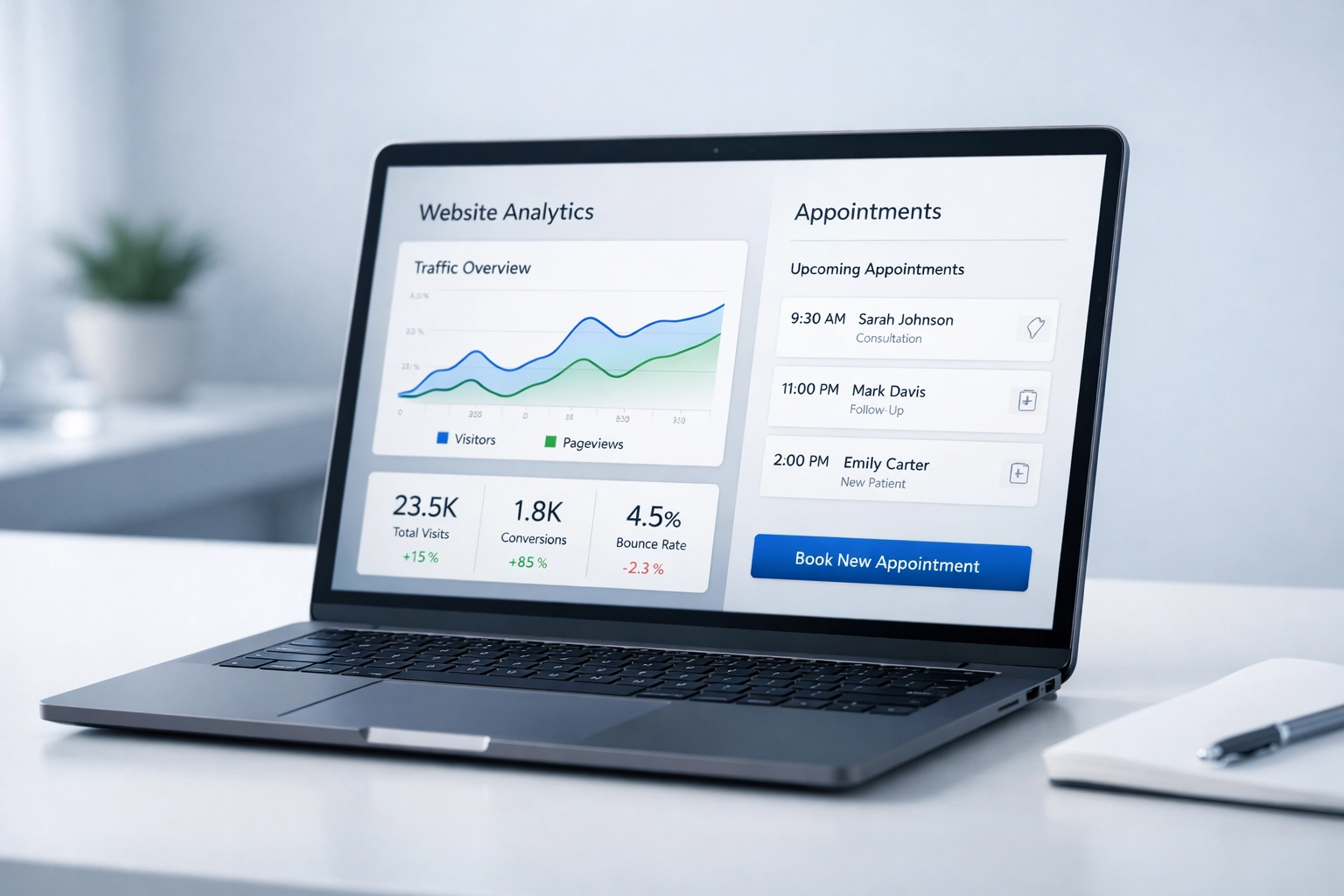
Track key metrics to understand what drives patient growth. Monitor Google Business Profile views, website traffic from local searches, form submissions, and phone calls. Measure new patient appointments and their acquisition sources.
Use Google Analytics to see which website pages generate the most appointment requests. Invest more effort in creating similar content.
Review your Google Business Profile insights monthly. Identify which photos receive the most views. Note when patients search for your practice most frequently. Adjust your posting schedule accordingly.
Getting Professional Support
Digital marketing requires consistent effort across multiple channels. Many chiropractic practices lack the time to manage SEO, reputation management, and advertising campaigns while treating patients.
Business Boosted specializes in local SEO and Google Maps optimization for service-based businesses. Our systems help chiropractic practices improve their online visibility, generate more patient reviews, and increase appointment bookings. Learn more about our solutions for healthcare practices.
Focus on the strategies that fit your current capacity. Start with Google Business Profile optimization and review generation. Add additional channels as you build momentum. Consistency matters more than perfection across every platform.
Your online presence directly impacts your practice growth. Patients actively search for chiropractic care in your area. Strategic digital marketing ensures they find your practice first.
Category: Industry-Specific Marketing
Excerpt: Strategic local SEO and Google Maps optimization help chiropractors attract patients searching for relief in their area.