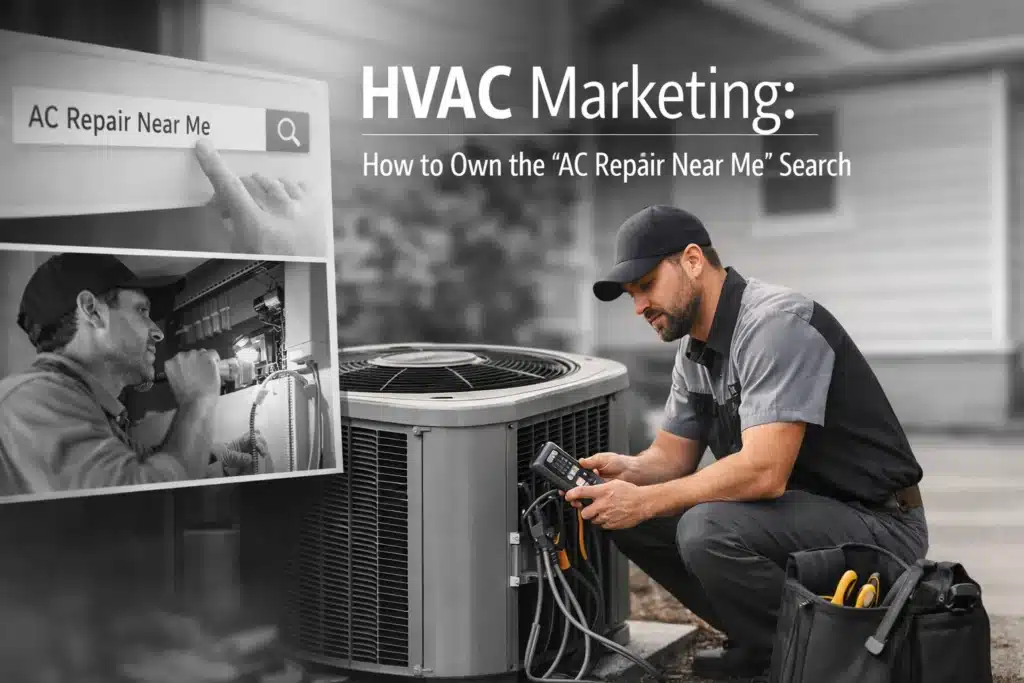
HVAC business owners: stop missing out on high-value jobs. Discover specialized marketing strategies designed to boost your local visibility and grow revenue.
HVAC businesses need consistent high-value jobs to maintain revenue. Marketing strategies determine which companies receive emergency calls and recurring service contracts. This guide outlines proven methods to capture customers.
Optimize Your Google Business Profile
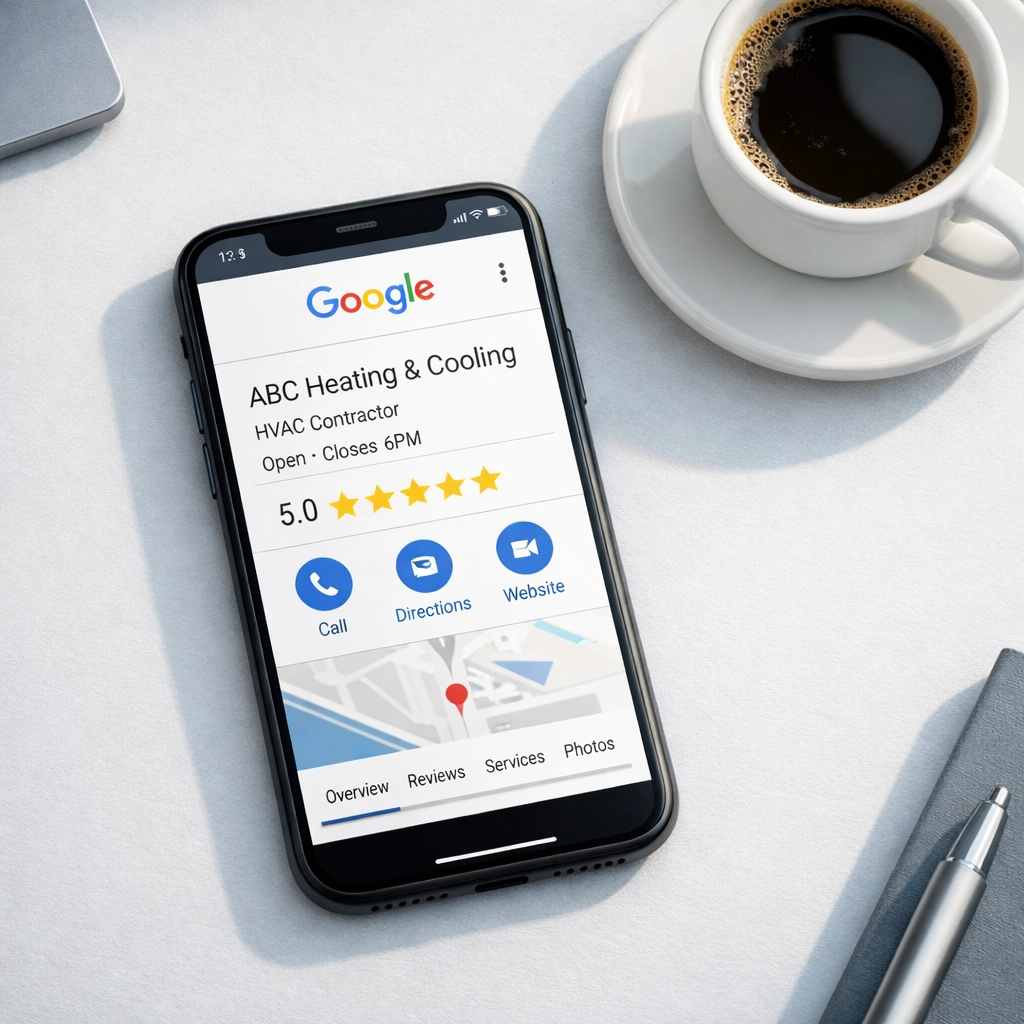
Your Google Business Profile generates local search visibility. Homeowners search for HVAC services when equipment fails. They select businesses from Map Pack results.
Complete your profile with accurate business information. Add service categories for heating repair, AC installation, and maintenance. Upload photos of completed jobs and equipment. Update business hours for holidays and emergencies.
Request reviews from satisfied customers. Send follow-up messages after service completion. Respond to all reviews within 48 hours. Five-star ratings increase click-through rates.
Create posts about seasonal maintenance and service specials. Posts appear in your profile and local search results. Update your profile weekly during peak seasons.
Implement Google Ads for Immediate Results
Google Ads places your business above organic search results. Customers searching for urgent repairs click paid listings first. This channel delivers qualified leads within days.
Target search terms like “AC repair near me” and “furnace replacement.” Use location targeting to focus on service areas. Set bid adjustments for mobile devices and peak hours.
Local Services Ads provide Google-screened badges. These ads appear at the top of search results. You pay per qualified lead instead of per click. Average cost per lead ranges from $70 to $250 based on location and competition.
Create separate campaigns for emergency services and scheduled maintenance. Emergency campaigns require higher budgets and extended hours. Maintenance campaigns focus on seasonal planning keywords.
Build Local SEO Rankings
Local SEO generates ongoing organic traffic. Homeowners research HVAC companies before calling. Strong rankings reduce advertising costs over time.
Create service pages for each location you serve. Include city names, service types, and customer testimonials. Add schema markup for local business information.
Build citations on industry directories and local business listings. Maintain consistent NAP (Name, Address, Phone) information across all platforms. Monitor citation accuracy quarterly.
Publish blog content addressing common HVAC questions. Topics include system troubleshooting, maintenance tips, and energy efficiency. Content builds authority and captures research-stage customers.
Develop Maintenance Plans for Recurring Revenue
Maintenance plans provide a predictable monthly income. Customers receive scheduled tune-ups and priority service. Plans reduce seasonal revenue fluctuations.
Offer packages with two annual visits for heating and cooling systems. Include filter replacements, system inspections, and repair discounts. Price plans at $150 to $300 annually.
Send automated reminders before seasonal peaks. Spring reminders focus on AC preparation. Fall reminders promote heating system checks. Reminders generate callback appointments.
Track maintenance plan renewals and customer retention. Plans typically renew at 70% to 85% rates. Renewal rates indicate service quality and customer satisfaction.
Use Multi-Channel Marketing Systems
Single-channel marketing creates revenue gaps. Diversified marketing maintains a consistent lead flow. Combine immediate-response channels with long-term growth strategies.
Google Ads and Local Services Ads deliver ready-to-buy customers. SEO and content marketing build authority over months. Email marketing maintains relationships with existing customers.
Retargeting ads capture website visitors who don’t immediately book. Display ads follow visitors across websites. Retargeting campaigns typically cost $20 to $50 per conversion.
Allocate budget across 3 to 4 core channels. Track the cost per lead for each channel monthly. Adjust spending based on performance metrics.
Leverage Email and SMS Marketing
Email marketing maintains customer relationships at a low cost. Segment lists by customer type and service history. Send targeted messages for seasonal maintenance and special offers.
Create automated email sequences for new customers. Welcome emails introduce your team and services. Follow-up emails request reviews and referrals.
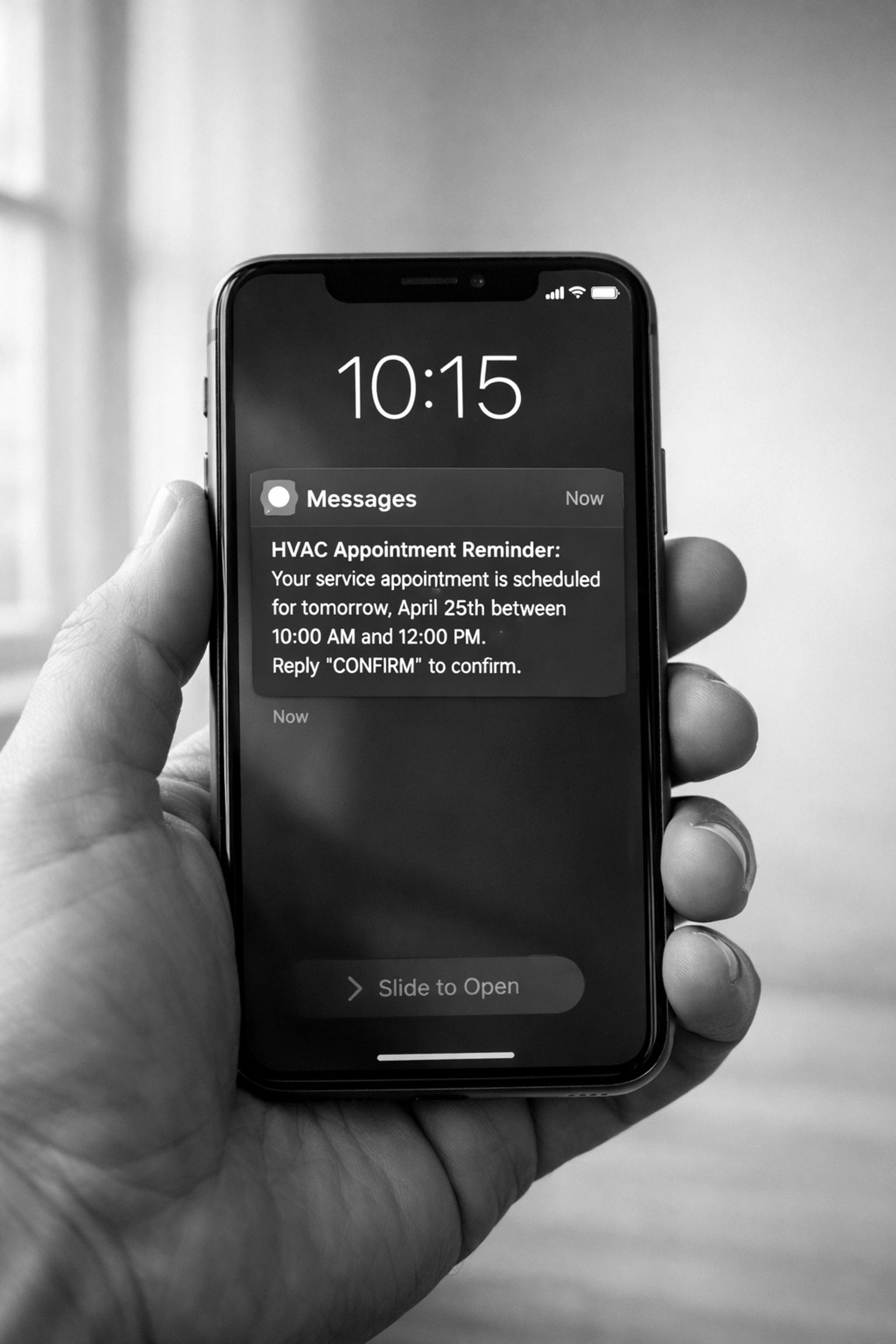
SMS marketing achieves 98% open rates. Use text messages for appointment reminders and time-sensitive offers. Send weather-triggered alerts when extreme temperatures affect HVAC systems.
Obtain explicit consent before sending marketing messages. Include opt-out options in all communications. Track engagement metrics to refine messaging.
Implement Geofencing for Precision Targeting
Geofencing targets customers in specific geographic areas. Create virtual boundaries around high-value neighborhoods. Display ads to mobile devices within targeted zones.
Set geofences around competitor locations. Capture customers researching multiple providers. Offer competitive pricing or service guarantees in ad messaging.
Target recently sold homes in your service area. New homeowners typically need HVAC inspections and upgrades. Geofencing delivers timely marketing to qualified prospects.
Campaign performance varies by market density. Urban areas generate higher impression volumes. Suburban markets require larger geofence radii.
Build Trust Through Content and Reviews
Customer reviews influence purchasing decisions. Display testimonials on your website and marketing materials. Video testimonials demonstrate real customer experiences.
Create before-and-after photos of installations and repairs. Visual proof builds credibility with prospective customers. Post project photos on social media and Google Business Profile.
Address common customer concerns in blog content. Topics include system lifespan, repair costs, and energy savings. Content reduces customer anxiety and positions your business as an authority.
Respond to negative reviews professionally. Offer solutions and demonstrate a commitment to customer service. Review responses influence how prospective customers perceive your business.
Track Marketing Performance
Measure cost per lead for each marketing channel. Calculate customer acquisition cost, including sales time and overhead. Compare metrics monthly to identify trends.
Track conversion rates from lead to booked appointment. Monitor show rates and job completion percentages. These metrics reveal process inefficiencies.
Use call tracking numbers for different marketing channels. Record calls to evaluate lead quality and sales performance. Adjust marketing based on which channels generate closable leads.
Calculate customer lifetime value, including service plans and referrals. Focus marketing investment on channels that attract high-value customers. Eliminate channels with negative ROI after 90 days.
HVAC Marketing: Balancing Immediate Response and Long-Term Visibility
HVAC marketing requires combining immediate-response advertising with long-term visibility strategies. Focus investment on search-based channels where customers actively seek solutions. Maintain consistent messaging across platforms and track monthly performance metrics.