
The pest control industry operates in a competitive local market. Homeowners and business owners search online when they need immediate solutions. Your company needs visibility at the exact moment potential customers look for help.
Digital marketing determines which pest control companies secure contracts and which ones get overlooked. The right strategy puts your business in front of customers actively searching for services in your area.
Local Search Optimization for Pest Control
Search engine optimization targets the customers in your service area. When someone searches "pest control near me" or "termite treatment in [city]," your business should appear in the results.
Local SEO focuses on specific geographic keywords. These include your city name, neighborhood names, and service-specific terms like "bed bug removal" or "rodent control." Your website content should include these terms naturally throughout service pages and location pages.
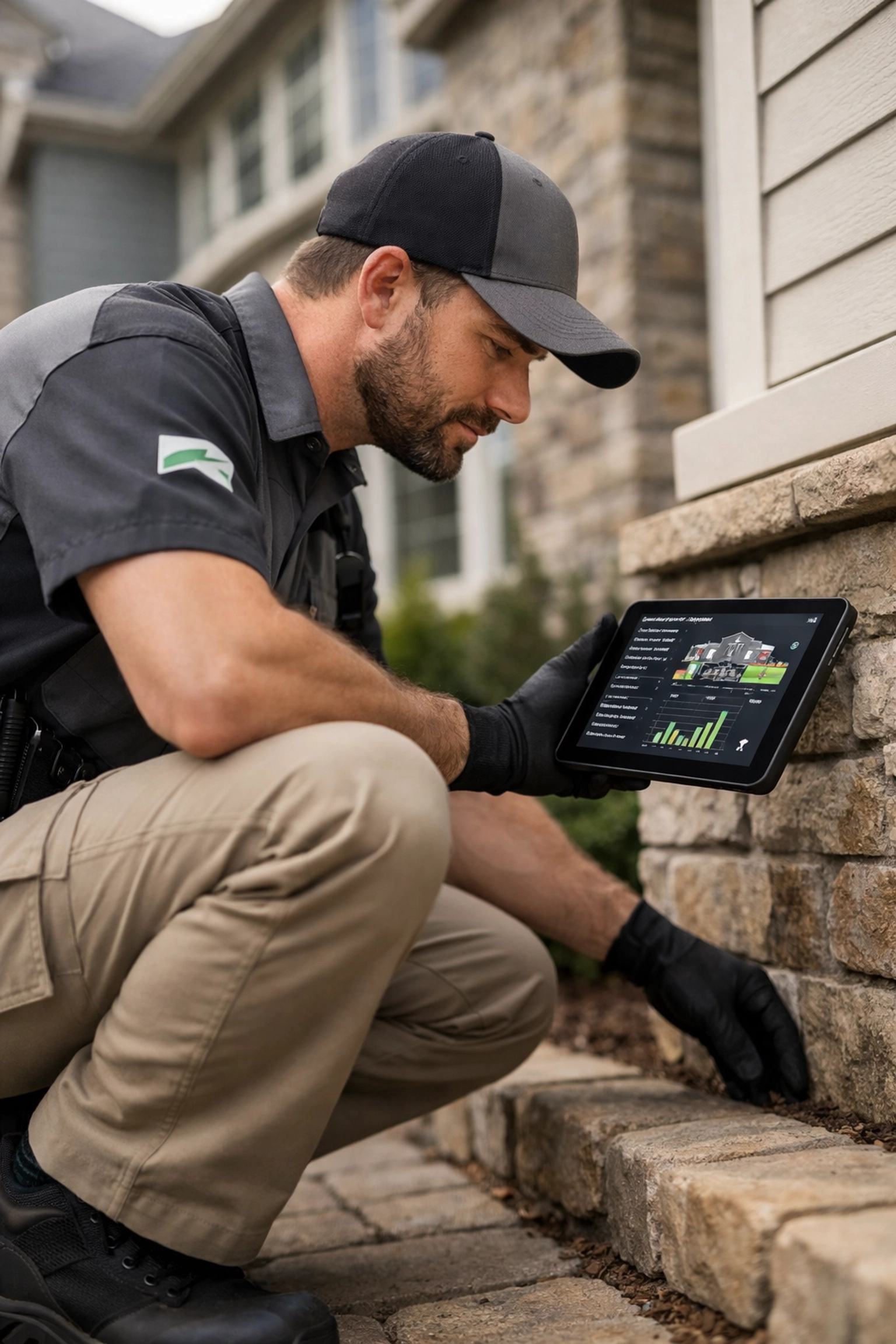
Technical optimization improves your search rankings. This includes proper site structure, fast loading speeds, mobile responsiveness, and schema markup that helps search engines understand your services and location.
Google Business Profile Management
Your Google Business Profile serves as your primary local search asset. This profile appears in Google Maps results and the local pack that displays above organic search results.
Complete profile optimization requires accurate business information. This includes your business name, address, phone number, service areas, business hours, and detailed service categories. Inconsistent information across online directories damages your local search performance.
Regular profile updates signal activity to Google's algorithm. Post service updates, seasonal promotions, and educational content about pest prevention. Add high-quality photos of your team, equipment, and completed work.
Reputation Management Systems
Online reviews influence customer decisions and search rankings. Google prioritizes businesses with consistent positive reviews in local search results.
A review generation system requests feedback from satisfied customers after service completion. Automated email or text message requests sent within 24-48 hours capture reviews while the service experience remains fresh.
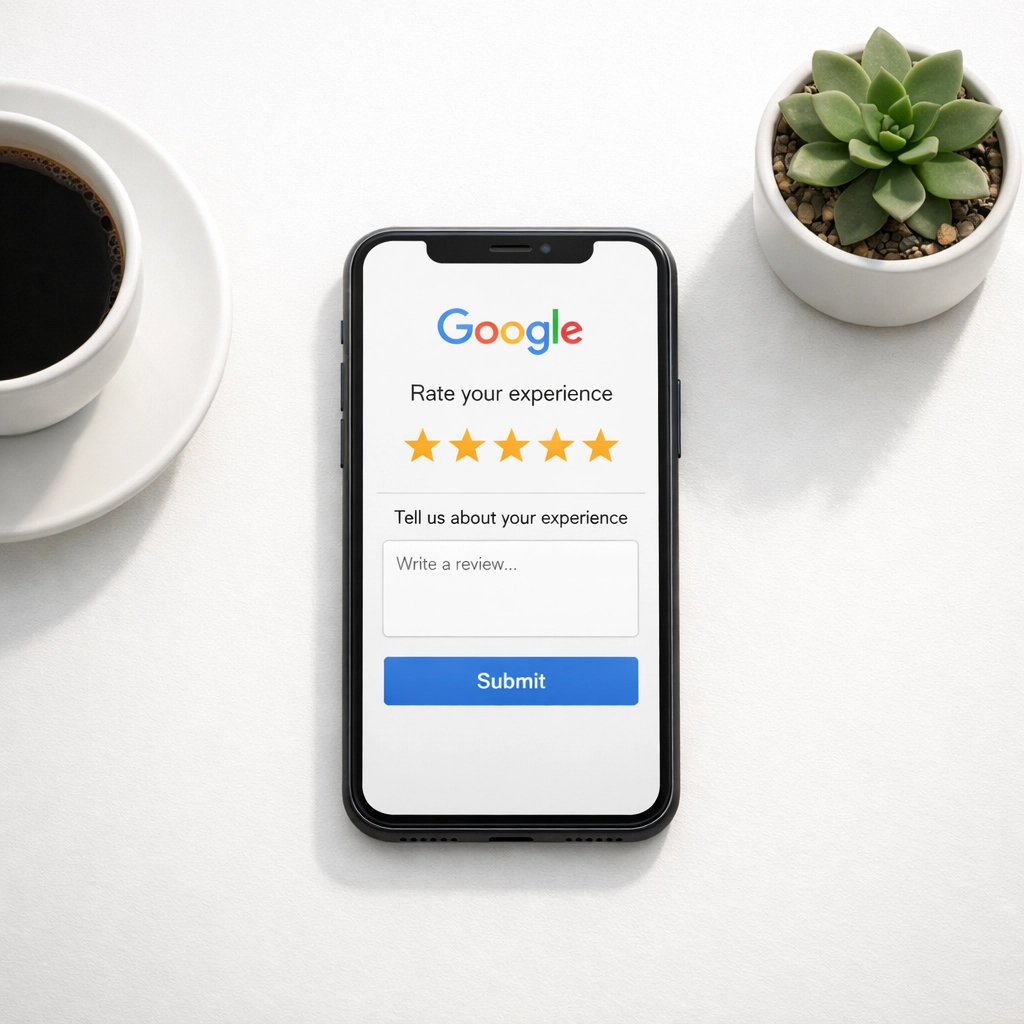
Review responses matter for both customers and search engines. Respond to all reviews within 24-48 hours. Thank customers for positive feedback and address concerns in negative reviews with solutions and contact information for further discussion.
Reviews on multiple platforms strengthen your online presence. Focus on Google reviews for search visibility, but also maintain profiles on Facebook, Yelp, and industry-specific directories like HomeAdvisor or Angi.
Website Conversion Optimization
Your website converts visitors into service calls. Clear navigation guides users to service information and contact options without confusion.
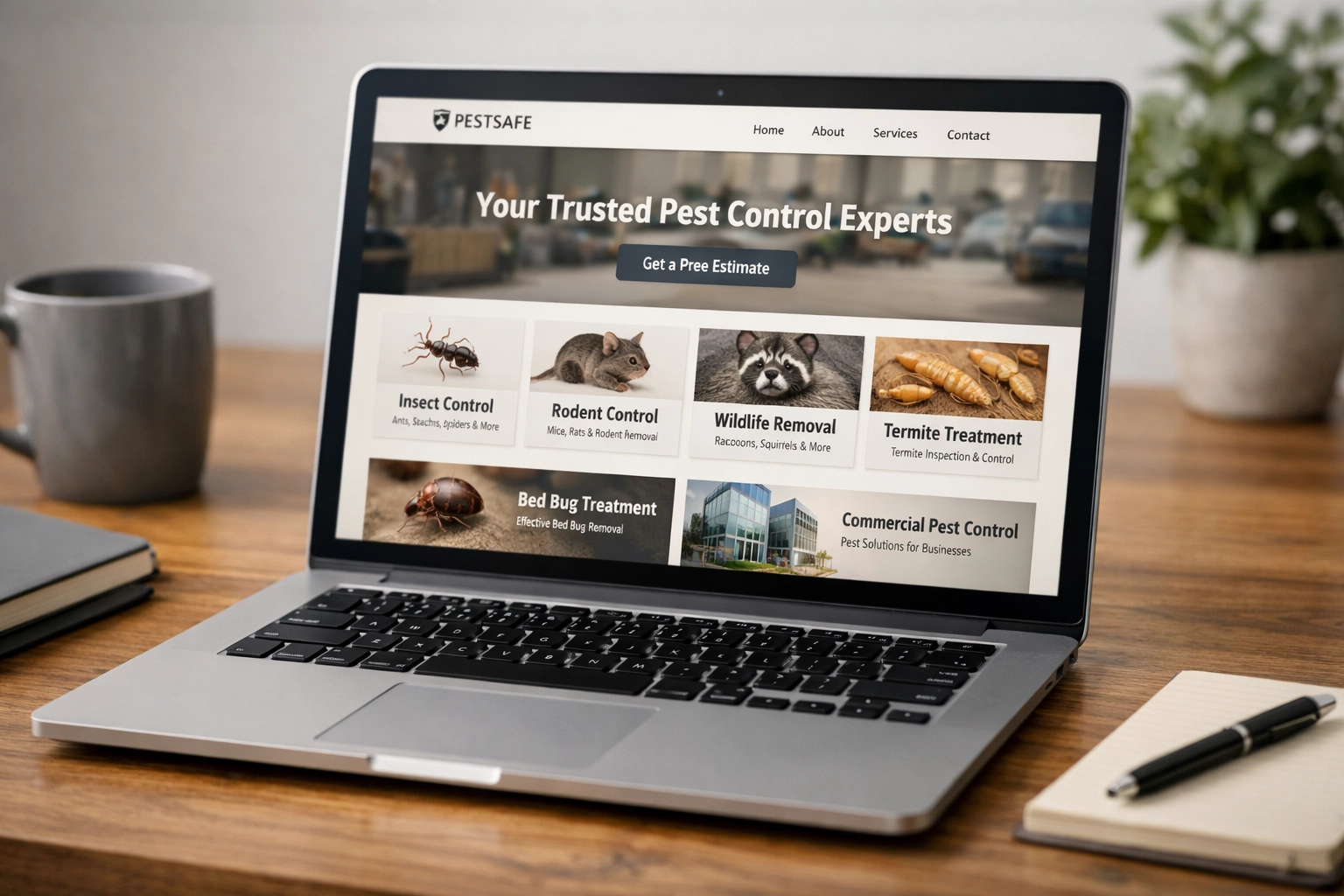
Service pages address specific pest problems. Create dedicated pages for termite control, bed bug treatment, rodent removal, and general pest prevention. Each page should explain the problem, your solution process, and why customers should choose your company.
Contact options should appear on every page. Include click-to-call phone numbers, contact forms, online scheduling links, and live chat when possible. Mobile users need one-tap calling functionality.
Trust signals reduce hesitation. Display certifications, licensing information, insurance coverage, guarantees, and customer testimonials prominently on your homepage and service pages.
Content Marketing Strategy
Educational content demonstrates expertise and improves search rankings. Blog posts and guides that answer common customer questions position your company as a knowledgeable resource.
Seasonal content aligns with pest activity patterns. Write about spring ant prevention, summer mosquito control, fall rodent preparation, and winter pest concerns. This content remains relevant year after year and attracts searches during peak seasons.
Long-form guides provide comprehensive information. Topics like "Complete Termite Prevention Guide" or "How to Identify Common Household Pests" attract organic traffic and establish authority in your field.
Video content increases engagement. Create short videos showing pest identification, prevention tips, and treatment processes. These videos work on your website, social media platforms, and YouTube for additional search visibility.
Paid Advertising Campaigns
Google Ads delivers immediate visibility for high-intent searches. When customers search for emergency pest control or specific treatment services, your ad appears at the top of search results.
Location targeting focuses ad spend on your service area. Set geographic boundaries that match your actual service zones to avoid wasted clicks from outside your coverage area.

Negative keywords prevent irrelevant clicks. Add terms like "DIY," "free," "jobs," and "courses" to your negative keyword list to filter out non-customer searches.
Facebook and Instagram ads reach customers before they actively search. Target homeowners in your service area with content about pest prevention, seasonal concerns, and service promotions. These platforms work well for brand awareness and seasonal campaigns.
Social Media Presence
Social media platforms extend your reach beyond search engines. Regular posts keep your company visible to local audiences and provide another channel for customer engagement.
Content variety maintains interest. Share before-and-after photos, customer testimonials, pest identification tips, prevention advice, team introductions, and behind-the-scenes content from service calls.
Educational posts generate engagement. Answer questions about common pests, explain treatment processes, and share seasonal pest activity information. This content gets shared and extends your organic reach.
Stories and short-form video suit pest control content. Instagram Stories and Facebook Stories allow quick updates about daily operations, service areas, and time-sensitive promotions.
Competitive Analysis
Monitor competitor online activity. Track their search rankings, review counts, social media presence, and advertising strategies. Identify gaps in their approach that create opportunities for your business.

Local competitors compete for the same searches and customers. Study their website content, service offerings, pricing transparency, and unique selling points. Use this information to differentiate your company and highlight your advantages.
Integrated Marketing Approach
Multiple marketing channels work together. SEO provides long-term organic visibility. Google Ads delivers immediate results. Social media builds brand awareness. Reputation management establishes trust. Each component supports the others.
Consistent branding across all channels reinforces recognition. Use the same logo, colors, messaging, and phone number on your website, social profiles, business listings, and advertisements.
Data tracking measures performance. Monitor website traffic sources, conversion rates, cost per lead, and customer acquisition costs. This information guides budget allocation and strategy adjustments.
Implementation Support
Business Boosted provides digital marketing solutions for pest control companies. Our services include local SEO optimization, Google Business Profile management, reputation management systems, website development, and integrated marketing campaigns.
The pest control industry requires specialized marketing knowledge. We understand seasonal demand patterns, local service area targeting, and the specific challenges pest control companies face in competitive markets.
Our approach combines multiple strategies into a coordinated system. This integration produces better results than isolated tactics applied without coordination.
Visit Business Boosted to learn how we help pest control companies dominate local search results and secure more service contracts.
Category: Industry-Specific Marketing
Excerpt: Digital marketing helps pest control companies dominate local search results and secure more service contracts through SEO and reputation management.